
NHL Analysis
I spent years pricing risk for a living, and if there is one thing an actuary learns early, it is that the variable everyone underrates usually turns out to be the one that matters most. In modern hockey, that variable is skating. Not shooting. Not size. Skating.
The game got faster. That sounds obvious. What is less obvious is how completely that single change reshaped what a good player looks like, and how hard it is now to hide a weak skater no matter how much else they bring.
Pace Turned Skating Into the Baseline
There was a time when a player could be a step slow and survive on hands, hockey sense, or plain stubbornness. That window has narrowed. When the whole sheet moves quicker, a half-second of hesitation becomes a scoring chance against you, and it compounds shift after shift.
Think of it as a floor rather than a ceiling. Elite skating does not guarantee a career. Poor skating, though, quietly caps one. It shows up everywhere at once, which is what makes it so unforgiving.
- Retrievals, where the first player to a loose puck sets the terms of the next ten seconds.
- Backchecking, where one recovered stride is the difference between a turnover and a breakaway.
- Net-front battles, where balance and edges decide who holds ground.
Transitions Are Where Games Are Won
The most important part of a hockey game is the messy few seconds when possession flips, and those seconds belong to the best skaters. A team that moves the puck up the ice cleanly, without stalling at its own blue line, generates chances the slower team simply never sees. Transitions are not a highlight category, they are the plumbing of the whole sport, and skating is the pressure in the pipes.
This is why coaches obsess over the neutral zone. It looks like empty real estate. It is actually the toll booth every scoring chance has to pass through, and the faster team collects the fee.
Edgework Is the Quiet Skill
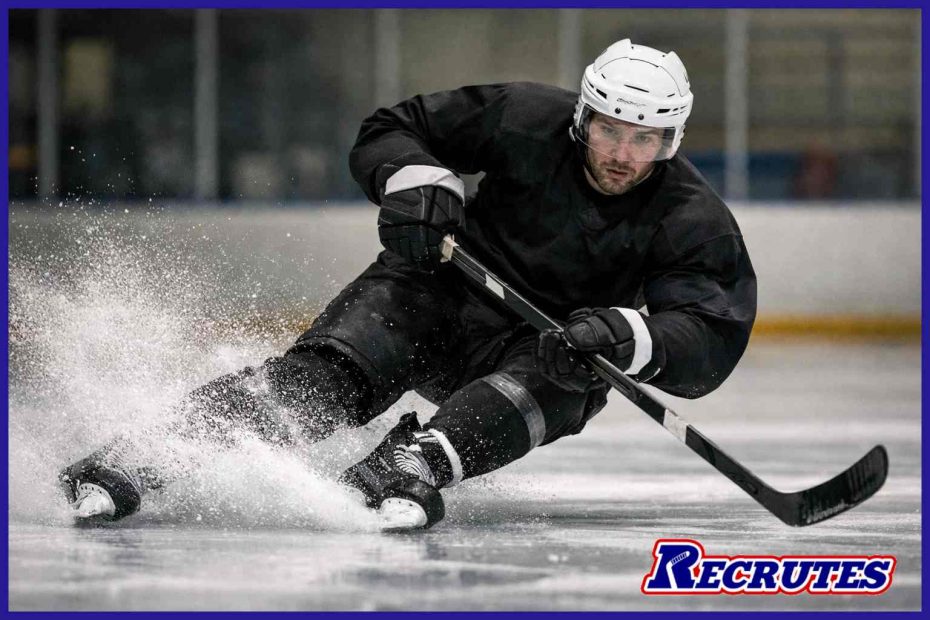
Straight-line speed gets the applause. Edgework wins the shifts. The ability to change direction, to stop and start without losing a beat, to hold an edge through a turn while the puck is on your stick, that is the skill that separates a fast skater from a good one. Plenty of players can fly in a straight line. Far fewer can do it while making a decision.
Edgework is also what lets a defenceman keep a gap tight without panicking, and what lets a forward buy the extra half-metre of space that turns a bad angle into a real chance. It is unglamorous. It is also the thing scouts rewind the tape to watch again.
How It Gets Coached
The encouraging part is that skating is teachable, more than the old hockey wisdom ever admitted. Development programs now treat it like a craft with its own drills, not a gift you either have or do not. Power skating, edge work, and stride mechanics get their own dedicated ice time, sometimes with specialists who do nothing else.
The old idea was that you skated to get in shape. The current idea is that skating is a technical skill you refine the way a golfer refines a swing, endlessly, in small increments, long after you are already good at it.
How It Gets Evaluated
Scouts have always trusted their eyes on skating, and their eyes are still the main tool. What has changed is the vocabulary. They separate top speed from acceleration, and acceleration from agility, because a player can be strong in one and ordinary in another. A quick first three strides often matters more than a high top gear, since most hockey happens in tight spaces where you never reach full flight.
They also watch skating under load, meaning while the player is also handling the puck, reading pressure, and making a choice. Clean feet in a drill are nice. Clean feet with a forechecker bearing down and a decision to make, that is the real test, and it is the one that projects forward.
The Bottom Line
Skating used to be one attribute among many. Now it is closer to the operating system everything else runs on. A brilliant shot cannot fire from a player who never gets open. Sharp hockey sense means little if the feet cannot execute the read in time.
None of this is a knock on the other skills. It is just the order of operations. Get the feet right, and the rest of the game has room to breathe. Get them wrong, and no amount of talent quite covers for it. In a sport that keeps getting faster, that math only points one way.