
Over the past few years, I’ve started to notice something that wasn’t always as consistent before.
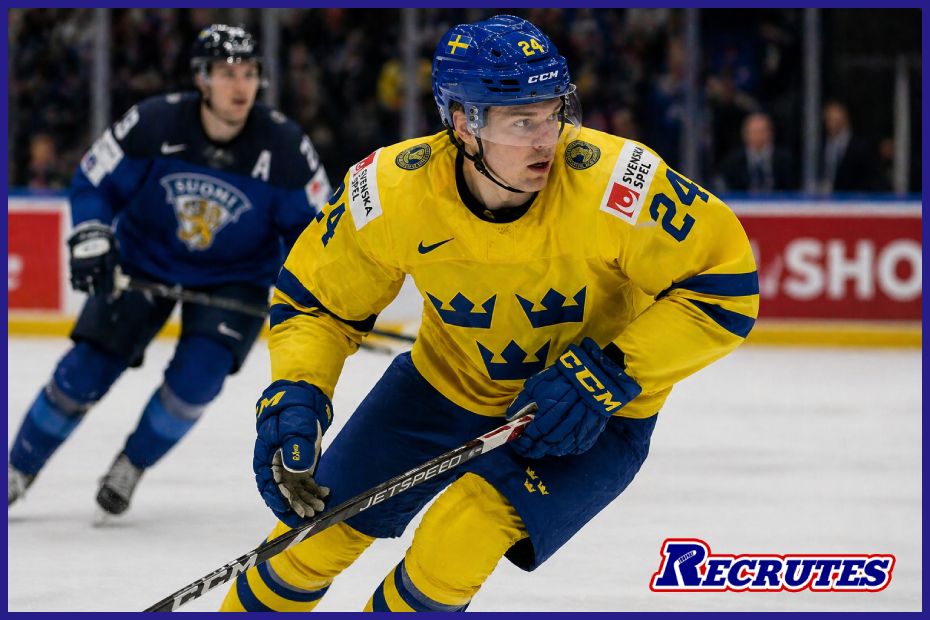
European prospects are arriving in the NHL with fewer obvious gaps in their game.
It’s not just skill anymore. It’s structure, awareness, and how comfortable they look playing against men before they even get drafted. You watch them in their first NHL games, and instead of adjusting for months, some of them look like they’ve already played in that environment.
That wasn’t always the case.
There used to be more of a transition period. Now, in a lot of situations, that gap is getting smaller.
Playing against professionals earlier makes a difference
One of the biggest shifts is simple.
A lot of European prospects are already playing in pro leagues before they ever get drafted.
That changes everything.
Instead of dominating junior players their own age, they’re dealing with older, stronger competition on a regular basis.
What that usually forces:
- quicker decision-making
- less time with the puck
- more structured defensive responsibility
- learning how to manage shifts without forcing plays
That type of experience is hard to replicate anywhere else.
Their game is built around structure from the start
Another thing that stands out is how consistent European systems are.
You don’t see as much chaos in their development leagues. The game tends to be more controlled, more positional, and less reliant on individual plays.
That environment builds habits early.
When I watch European prospects, I often notice:
- strong positioning away from the puck
- better spacing in the offensive zone
- patience when plays aren’t there
- fewer forced decisions under pressure
Those details don’t always show up on the scoresheet, but they translate quickly to the NHL level.
Ice time is earned differently
In North America, younger players sometimes get top minutes because of potential.
In many European leagues, that’s not how it works.
You earn ice time based on reliability, not just upside.
That forces young players to round out their game earlier.
They need to:
1 limit mistakes in their own zone
2 play within structure
3 adapt to smaller roles when needed
4 contribute without always having the puck
That type of development builds more complete players.
Skating development has quietly improved
There used to be a clear difference in skating styles between European and North American players.
That gap isn’t really there anymore.
European development programs have put more emphasis on skating mechanics over the past decade, and it shows.
Now you see:
- better acceleration
- stronger edge control
- more balance through contact
- improved transition skating
It’s one of the reasons why European players are adjusting faster once they arrive.
Less reliance on one-dimensional skill
Another change I’ve noticed is how well-rounded European prospects are becoming.
There used to be more specialists. Players who were either highly offensive or strictly defensive.
Now, most prospects coming out of those systems can handle multiple situations.
They can:
- play in transition
- contribute defensively
- manage puck possession
- adjust their role depending on the game
That flexibility makes it easier for NHL teams to integrate them.
Why the adjustment period is shorter now
All of these factors combine into one thing.
Less adjustment needed.
When a player has already:
- played against professionals
- learned structured systems
- adapted to limited space
- developed skating consistency
They don’t need as much time to figure things out.
They’ve already been exposed to many of the same challenges.
It’s changing how teams evaluate prospects
I’ve also noticed that teams are becoming more comfortable drafting from European leagues earlier than before.
There’s less uncertainty.
Scouts have more confidence in what they’re seeing because those players are already facing stronger competition.
That doesn’t mean every European prospect is NHL-ready right away.
But the baseline is higher than it used to be.
Final thoughts about eu prospects
The difference now isn’t just talent.
It’s preparation.
European prospects are entering the NHL with habits that fit the modern game. They’re not trying to adjust to structure, they’re already playing within it.
And when that foundation is already there, the transition becomes a lot smoother.
That’s why more of them are making an impact earlier than we were used to seeing.